Current Issue
2026, Volume 55 Issue 2
Publication date
30 April 2026

Sponsored by
Fujian Institute of Subtropical Botany
ISSN 1009-7791
CN 35-1243/S

Current Issue

30 April 2026, Volume 55 Issue 2 Previous Issue   
For Selected: Toggle Thumbnails

Research articles
Analysis of Codon Usage Bias in the Chloroplast Genomes of 21 Fritillaria Species
ZHAO Xin-zhu, CUI Fan-hao, LI Hong, ZHOU Meng-li, WANG Rui-hong
2026, 55(2): 131-143.  DOI: 10.3969/j.issn.1009-7791.2026.02.001
Abstract ( )   PDF (1139KB) ( )  
To analyze the codon usage bias in the chloroplast genomes of Fritillaria species, and to investigate their codon usage patterns and influencing factors, we employed CodonW1.4.4 and the online tool CUSP to calculate relevant codon parameters from the chloroplast genomes of 21 Fritillaria species. Corresponding statistical plots were generated. The results revealed a strong A/U bias in the chloroplast genomes of Fritillaria, consistent with patterns commonly observed in dicotyledonous plants. The slope of the neutral plot (ranging from 0.45 to 0.52) indicated that both natural selection and mutation pressure contributed to codon usage. In the ENC-plot, more than 50% of the genes fell below the standard curve, and the PR2-plot demonstrated an imbalance in the third nucleotide position (T>A, G>C), collectively supporting natural selection as the dominant factor. Cluster analysis based on the RSCU heatmap showed that closely related species shared highly similar codon usage patterns. Ten common optimal codons were identified, all ending with A or U, which is highly consistent with the A/U bias. These findings provide important scientific insights for understanding the evolutionary mechanisms of chloroplast genomes in Fritillaria, reconstructing molecular phylogenies.
References | Related Articles | Metrics
Molecular Identification of Polygonatum cyrtonema and P. sibiricum in Hubei Region Based on ETS Sequences
ZHANG Jun-zhuo, XIONG Chao, XIANG Heng, WANG Yong-cui, XU Ran, MA Zhao-cheng
2026, 55(2): 144-152.  DOI: 10.3969/j.issn.1009-7791.2026.02.002
Abstract ( )   PDF (2214KB) ( )  
The external transcribed spacer (ETS) molecular marker was used to identify and analyze Polygonatum cyrtonema and P. sibiricum from Hubei Province, to provide a basis for their efficient discrimination. A total of five individuals of P. cyrtonema and eleven of P. sibiricum were collected from Hubei Province for molecular analysis. The ETS sequence was amplified by PCR, followed by sequence feature analysis using bioinformatics methods. A phylogenetic tree was constructed using the neighbor-joining (NJ) method. Results showed that the ETS sequences of both species were 1 000 bp in length, yet their nucleotide compositions differed markedly. In P. cyrtonema, GC content was 41.6%-45.1%, with an average intraspecific genetic distance of 0.208 and an intraspecific sequence similarity of 88.1%, containing 134 parsimony informative sites. In P. sibiricum, GC content was significantly higher by 56.5%-61.5%, the average intraspecific genetic distance was 0.131, and the sequence similarity was 79.2%, with 298 parsimony informative sites. In the NJ phylogenetic tree, P. cyrtonema and P. sibiricum formed clearly separated clades, enabling effective discrimination. The ETS sequence can serve as a species-specific molecular marker for distinguishing P. cyrtonema and P. sibiricum, providing a molecular basis for precise germplasm identification and genetic diversity analysis of the two species, as well as for quality control of Hubei's local Polygonatum medicinal materials.
References | Related Articles | Metrics
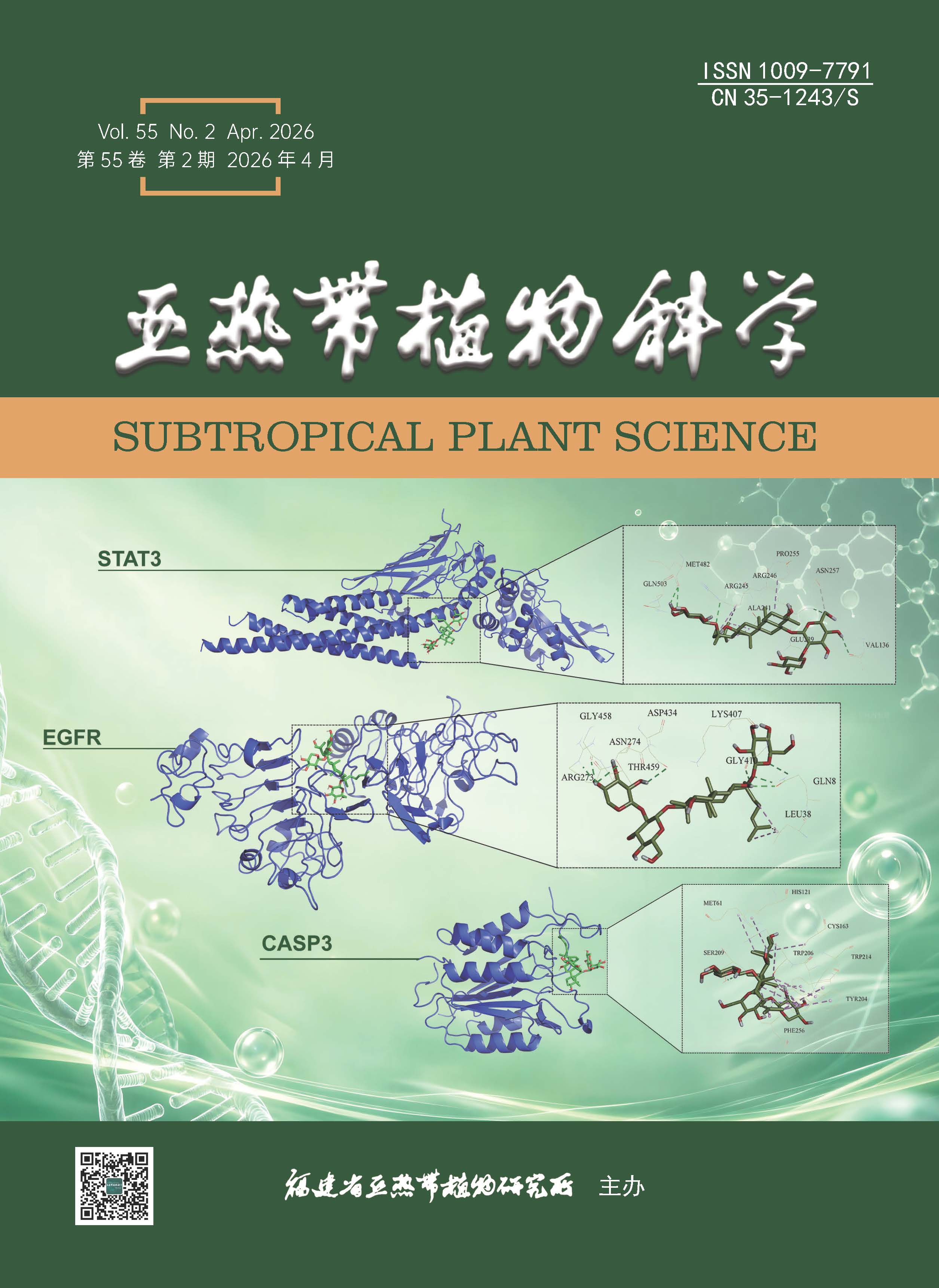
Exploring the Mechanism of Notoginsenoside R1 against Acute Liver Injury in Mice by Integrating Network Pharmacology and Hepatic Metabolomics
YOU Xiao-feng, ZHANG Yan-yan, WEI Yi-cong
2026, 55(2): 153-168.  DOI: 10.3969/j.issn.1009-7791.2026.02.003
Abstract ( )   PDF (18447KB) ( )  
The potential mechanism of Notoginsenoside R1 (NGR1) in the treatment of acute liver injury was investigated by integrating network pharmacology and metabolomics. An acute liver injury model was established in mice using lipopolysaccharide (LPS). NGR1 was administered for treatment. Liver pathological changes were observed via histopathological staining, and the expression of inflammatory factors and fibrosis-related genes was detected by qRT-PCR. Databases including TCMSP, PharmMapper, SwissTargetPrediction, and GeneCards were used to identify potential targets of NGR1 and liver injury-related targets, from which core targets were screened. A protein-protein interaction (PPI) network was constructed, and Gene Ontology (GO) and Kyoto Encyclopedia of Genes and Genomes (KEGG) enrichment analyses were performed. The binding affinity between NGR1 and key targets was validated. LC-MS technology was employed to analyze the regulatory effects of NGR1 on LPS-induced model mice. The animal experiments demonstrated that NGR1 ameliorated LPS-induced acute liver injury. Network pharmacology screening identified 64 potential targets, suggesting that NGR1 might regulate immune-inflammatory responses through signaling pathways such as PI3K-AKT, cAMP, and purine metabolism. Molecular docking results indicated that the binding energies between NGR1 and the targets were all below –5 kcal·mol–1, suggesting good binding activity. LC-MS analysis identified 27 endogenous differential metabolites, and NGR1 intervention significantly altered the levels of 24 of them. The affected metabolic pathways primarily involved purine metabolism, pantothenate and CoA biosynthesis, among others. Integrated analysis revealed that both network pharmacology and metabolomics implicated the purine metabolism pathway. This study preliminarily elucidates that NGR1 may alleviate acute liver injury via the purine metabolism pathway, providing a scientific basis for its clinical application and further research.
References | Related Articles | Metrics
Protective Effect of Starch from Canna indica 'Edulis' against Acute Gastric Mucosal Injury in Mice
XU Qin-yan, LIANG Cui-ting, WANG Wen-feng, LONG Jin-ting, JIA Xue-chong, LI Peng-fei, LI Dong-li, ANG Song
2026, 55(2): 169-175.  DOI: 10.3969/j.issn.1009-7791.2026.02.004
Abstract ( )   PDF (1952KB) ( )  
To investigate the protective effect of starch from Canna indica 'Edulis' (Jinshanyu) produced in Jiangmen, Guangdong Province, a mouse model of acute gastric mucosal injury was induced by hydrochloric acid-ethanol. By intragastric administration of Jinshanyu starch, the gastric index, gastric histopathology, gastric mucosal injury, serum lipid metabolism, and changes in oxidative stress levels in gastric tissue of mice were observed and determined. The results showed that, compared with the model group, the gastric index of mice in the Jinshanyu starch treatment groups were significantly increased, while the gastric mucosal injury index was significantly decreased. Specifically, the gastric mucosal injury score index of the high-dose Jinshanyu starch group was reduced to 2.70, with an injury inhibition rate as high as 60.51%. Histopathological results of gastric tissue indicated that the color and morphology of the gastric surface of mice in the Jinshanyu treatment groups gradually approached those of the normal group. In comparison with the model group, the length and width of the hemorrhagic bands were significantly reduced; meanwhile, gastric mucosal congestion, hemorrhagic injury, and inflammatory cell infiltration were significantly ameliorated, the injured area was markedly decreased, and the epithelial cell structure remained relatively intact. In addition, compared with the model group, the serum contents of total cholesterol (TC), triglycerides (TG), and low-density lipoprotein cholesterol (LDL-C) in mice of the Jinshanyu treatment groups were significantly decreased, whereas the content of high-density lipoprotein cholesterol (HDL-C) was significantly increased. Moreover, the activities of total superoxide dismutase (SOD) and reduced glutathione (GSH) in gastric tissue were notably elevated. In conclusion, Jinshanyu starch exerts a protective effect against acute gastric mucosal injury in mice by improving the oxidative stress status of gastric tissue induced by hydrochloric acid-ethanol, regulating lipid metabolism disorders, and synergistically alleviating gastric mucosal hyperemia, hemorrhage, and inflammatory damage. This finding provides a scientific basis for the development of Jinshanyu starch-based products targeting gastric mucosal injury protection.
References | Related Articles | Metrics
Effect of ε-Poly-L-lysine Treatment on Quality and Storability of Postharvest Longan Fruit
CHEN Qi, SUN Jun-zheng, LIU Qing-qing, LIN He-tong, CHEN Yi-hui
2026, 55(2): 176-185.  DOI: 10.3969/j.issn.1009-7791.2026.02.005
Abstract ( )   PDF (742KB) ( )  
Longan (Dimocarpus longan) is a famous subtropical fruit in China with high nutritional and medicinal value. Longan fruit matures during the hot and humid summer season and exhibits vigorous postharvest physiological metabolism, which makes preservation challenging. It is susceptible to infection by Phomopsis longanae, which accelerates postharvest disease development, resulting in quality deterioration and shortening storage and shelf life. In this study, ‘Fuyan’ longan fruit was used as the experimental material. A control group was established by inoculating the fruits with P. longanae, while the treatment group received ε-poly-L-lysine (ε-PL) treatment prior to inoculation with P. longanae. The objective was to investigate the effects of ε-PL treatment on the physiological quality and storability of longan fruits during storage. The results showed that ε-PL treatment maintained higher marketable fruit rate and firmness, and delayed the increase of weight loss rate in postharvest longan fruit. On day 5, the weight loss rate of the treatment group was 32.19% lower than that of the control group, whereas fruit firmness was 27.17% higher. In addition, ε‑PL treatment sustained higher L*, a* and b* values and the contents of chlorophyll, carotenoid, anthocyanin, flavonoid and total phenol, which preserved better pericarp color and appearance. Furthermore, ε-PL treatment also maintained higher contents of soluble solids, total soluble sugar and sucrose in the pulp, thereby delaying pulp acidification. In conclusion, ε-PL treatment can effectively maintain the quality and storability of longan fruit.
References | Related Articles | Metrics
Effects of Different Cultivation Conditions on Growth Traits and Characteristic Components of Ficus hirta
LIU Zuo-mei, WANG Bo, WEI Ben-zhu, DING Zhi-hong, XIE Bing, XIE Xiao-lu, ZHANG Ji-ling
2026, 55(2): 186-192.  DOI: 10.3969/j.issn.1009-7791.2026.02.006
Abstract ( )   PDF (423KB) ( )  
Taking tissue culture seedlings of Ficus hirta as test materials, the ecological cultivation of F. hirta was carried out under the mixed broad-leaved forest of Schima superba and Liquidambar formosana, and the effects of different plant spacing, different canopy closures, different slope positions, different soil types and different afforestation time on the growth characteristics and characteristic components of F. hirta were analyzed. The results showed that the plant spacing of 60 cm × 60 cm had significant difference in plant height, but there was no significant difference in crown width (east and west), and the fresh weight of underground part was 190.6 g. The canopy closures of 0.3–0.7 had significant differences on the plant height, ground diameter, crown width, leaf width and leaf length of F. hirta, and the fresh weight of underground part was 182.5 g, the content of psoralen was 115.86 μg·g–1. There was a significant difference in plant height when going uphill, but no significant difference in crown width (north and south) and ground diameter, with the fresh weight of underground part 116.3 g, and the content of psoralen 279.25 μg·g–1. The plant height, ground diameter and crown width in yellow sandy loam were significantly better, the fresh weight of underground part was 164.4 g, and the content of psoralen was 190.49 μg·g–1. The plant height, ground diameter and crown width were significantly better from afforestation in spring while the fresh weight of underground part was 169.5 g. It is showed that the cultivation conditions of plant spacing of 60 cm × 60 cm, canopy density (0.3–0.7), uphill, and spring afforestation should be selected, under this cultivation condition, F. hirta grow robustly and had high yield and excellent quality.
References | Related Articles | Metrics
Effects of Different Concentrations of Residual Sludge on the Growth and Yield of Two Oilseed Crops
WANG Hong-kai, QIU Jian-meng, WANG Jin-xiang, WEI Wen-yu, CHANG Guo-hua
2026, 55(2): 193-202.  DOI: 10.3969/j.issn.1009-7791.2026.02.007
Abstract ( )   PDF (560KB) ( )  
In order to determine the optimal application concentration of residual sludge in oilseed crop production, pot experiments were conducted to investigate the effects of different residual sludge concentrations (0%, 25%, 50%, 75%, and 100%) on the growth, physiological characteristics, yield, and quality of rapeseed and sunflower, while also assessing environmental risks. Results indicated that increasing residual sludge concentration significantly elevated soil organic matter and available nitrogen, phosphorus, and potassium levels, while slightly decreasing soil pH and markedly increasing electrical conductivity. Total and available forms of Cd, Pb, Cu, and Zn in soil increased, though none exceeded national agricultural safety standards. Crop physiological indicators exhibited a pronounced dose-response effect to residual sludge concentration. At the 75% treatment level, rapeseed and sunflower exhibited the highest chlorophyll content, net photosynthetic rate, and antioxidant enzyme activity, along with the lowest malondialdehyde content. Correspondingly, crop growth and yield significantly increased, with per-plant yields of rapeseed and sunflower increasing by 62.9% and 37.9%, respectively, compared to the control. Oil and protein content in seeds also increased simultaneously. Comprehensive analysis indicates that under the experimental conditions, a 75% residual sludge concentration ratio enhances oilseed crop yield and quality while maintaining controllable environmental risks. This concentration is thus considered an appropriate application level for residual sludge resource utilization in oilseed crop production.
References | Related Articles | Metrics
Preliminary Investigation of Phytoplankton in the River Sections of Zhentouba Ⅱ and Shapingba Ⅰ Hydropower Stations in 2019
JIN Bo, ZHANG Zhi-ming, YANG Chang-fu, QIN Zhi-yi, LI Ming, HU Jun, CHI Shi-yun
2026, 55(2): 203-215.  DOI: 10.3969/j.issn.1009-7791.2026.02.008
Abstract ( )   PDF (4772KB) ( )  
To characterize the background characteristics of phytoplankton communities in the evaluation reaches prior to the construction of Zhentouba Ⅱ and Shapingba Ⅰ Hydropower Stations on the Dadu River, and to provide a comparative basis for the retrospective ecological evaluation after the stations completed, a systematic investigation of phytoplankton was conducted in July (summer) and October (autumn) in 2019. The study covered an 87.5 km mainstream section from Shenxigou to Gongzui and major tributaries, with 18 sampling stations established. Qualitative and quantitative collection of phytoplankton was carried out, and environmental factors were measured simultaneously. Multivariate statistical methods including Principal Coordinates Analysis (PCoA), multi-response permutation procedures (MRPP), and Distance-based Redundancy Analysis (dB-RDA) were used to analyze the community structure and influencing factors. The results showed that a total of 148 phytoplankton species belonging to 7 phyla and 68 genera were detected in the evaluation area, dominated by Bacillariophyta (76 species, accounting for 51.35%), Chlorophyta (47 species, 31.76%), and Cyanophyta (16 species, 10.81%). The community structure exhibited significant seasonal heterogeneity (P<0.001): the number of species in summer (43 species) was significantly less than that in autumn (124 species), while the average density (5.39×10⁵ cells·L–1) was an order of magnitude higher than that in autumn (6.34×10⁴ cells·L–1). Spatially, the phytoplankton abundance in the mainstream (7.03×10⁵ cells·L–1) was higher than that in the tributaries (3.55×10⁵ cells·L–1) in summer, whereas the tributaries (7.56×10⁴ cells·L–1) had higher abundance than the mainstream (5.36×10⁴ cells·L–1) in autumn. The dominant species showed seasonal succession: diatoms such as Cyclotella sp. and Achnanthes sp. dominated in summer, while the dominance of Cyanophyta and Chlorophyta increased in autumn. dB-RDA analysis revealed that water temperature was the main environmental factor driving the changes in community structure, and sediment content indirectly affected the number of phytoplankton species and abundance by regulating transparency. This study clarified the background characteristics and spatio-temporal variation patterns of phytoplankton communities in the evaluation reaches, and identified the key environmental influencing factors, providing scientific support for ecological protection and retrospective evaluation after the construction of cascade hydropower stations.
References | Related Articles | Metrics
Study on Remediation Effects of Different Aquatic Plant Functional Group Combinations on Polluted Pond Aquaculture Water
XIAO Ying-xue, GUO Si-yi, TAN Xiao-yao, ZHU Qian, HOU Tian-ye, ZHANG Yu-ting, LIU Hui, ZHOU Ting, FU Hui
2026, 55(2): 216-225.  DOI: 10.3969/j.issn.1009-7791.2026.02.009
Abstract ( )   PDF (1217KB) ( )  
With the rapid expansion of aquaculture, the discharge of nutrient-rich wastewater has emerged as a significant impediment to the industry's sustainable growth. This study systematically investigated the wastewater purification capabilities of aquatic plant communities with varying functional group compositions. By assessing their effectiveness in treating crucian carp culture effluent, we aimed to provide a scientific foundation and practical guidance for the ecological remediation of aquaculture wastewater. The experiment utilized three distinct plant functional groups: submerged plants (e.g., Elodea nuttallii, Hydrilla verticillata, Ceratophyllum demersum), floating plants (e.g., Ipomoea aquatica, Eichhornia crassipes, Alternanthera philoxeroides), and emergent plants (e.g., Phragmites australis, Zizania latifolia, Typha orientalis). Three treatment combinations were established using crucian carp culture wastewater as the substrate: S (submerged plants only), SF (submerged+floating plants), and SFE (submerged+floating+emergent plants). Key water quality parameters, including total nitrogen (TN), ammonium nitrogen (NH4+-N), nitrate nitrogen (NO3-N), total phosphorus (TP), and chemical oxygen demand (COD), were monitored over time. The results indicated that the SFE combination achieved the highest purification rates for TN (97.16%) and NH4+-N (97.86%), demonstrating a purification hierarchy of SFE>SF>S. The SF combination proved most effective for NO3-N removal, with a purification rate of 99.76%, followed by SF>SFE>S. The S combination yielded the best results for TP (79.3%) and COD (58.52%) purification, with an order of S> SF>SFE. Across all treatments, peak purification rates were observed at 97.16% for TN, 79.30% for TP, 99.54% for NO3-N, 97.86% for NH4+-N, and 58.52% for COD. Overall, nitrogen removal was markedly more efficient than phosphorus removal and organic matter degradation. This research highlights the differential impacts of aquatic plant functional group combinations on crucial pollution indicators in aquaculture wastewater and offers a practical technical solution for the ecological restoration of actual aquaculture systems.
References | Related Articles | Metrics
Reviews
Advances on Chemical Constituents and Biological Activities of Griffonia
HE Fan, LIU Shao-song, ZHENG Zhi-zhong, CHE Xiao-rong, LIN He-tong, MING Yan-lin
2026, 55(2): 226-235.  DOI: 10.3969/j.issn.1009-7791.2026.02.010
Abstract ( )   PDF (722KB) ( )  
Griffonia is an ancient genus in the family Fabaceae, with only four species distributed in West African countries including Ghana, Côte d'Ivoire and Togo. The current study of this genus focuses on the Griffonia simplicifolia, whose seeds have a high content of the antidepressant active ingredient 5-hydroxytryptophan (5-HTP), as well as other alkaloids, flavonoids, and unsaturated fatty acid classes, which have antidepressant, anticancer, antimicrobial, anti-inflammatory, antioxidant, and other bioactivities. In this paper, we review this genus from the aspects of chemical constituent and biological activities, with a view to providing reference for exploring the biosynthesis and exploitation research of 5-HTP.
References | Related Articles | Metrics
Advances on Key Tissue Culture Techniques of Aquilaria Species
ZHENG Ping, LIN Xue-mian, DENG Fu-jun, MAO Yi-ning, QU Xing-yu, CHEN Si-wei, LAN Zhou-jing, SONG Guan-hua
2026, 55(2): 236-243.  DOI: 10.3969/j.issn.1009-7791.2026.02.011
Abstract ( )   PDF (552KB) ( )  
Aquilaria species are valuable medicinal and aromatic trees that have been increasingly threatened by overexploitation. Plant tissue culture provides an efficient approach for rapid clonal propagation and germplasm conservation. This review synthesizes current research on key tissue culture techniques in Aquilaria species, with emphasis on explant selection, disinfection, direct and indirect organogenesis, culture media and culture conditions, rooting, and acclimatization. These studies are reviewed to provide scientific guidance and technical support for large-scale propagation and sustainable utilization of Aquilaria species.
References | Related Articles | Metrics
Distribution and Development Prospects of Edible Fern Resources in China
SUN Ye, TONG Qi, ZANG Si-qi, LIU Bao-dong, WU Yu-huan, WANG Xin
2026, 55(2): 244-248.  DOI: 10.3969/j.issn.1009-7791.2026.02.012
Abstract ( )   PDF (819KB) ( )  
Resources of edible ferns are among the core resources of green food-wild vegetables. Owing to their unique and delicious taste, rich nutritional substances, and distinctive natural bioactive components, they possess great development potential in the natural and healthy food market and have become popular characteristic green foods sold both domestically and internationally. However, to date, research on edible species within this group has mostly been limited to scattered reports in specific regions or evaluations of the edible value of single species, lacking relatively systematic studies. Therefore, this paper systematically sorted out and integrated the relevant literature on edible ferns published between 1985 and 2025, focusing on summarizing the species composition of edible ferns in China, their main edible parts and corresponding utilization methods, as well as information on the geographical distribution of edible species. It is expected to provide theoretical references and data support for the subsequent in-depth development, scientific protection, and sustainable utilization of edible fern resources in China.
References | Related Articles | Metrics
Strategic Conception for AI-driven Inheritance and Innovation of Min-Tai Herbal Medicine Intangible Cultural Heritage
QIU Ying-kun
2026, 55(2): 249-254.  DOI: 10.3969/j.issn.1009-7791.2026.02.013
Abstract ( )   PDF (403KB) ( )  
The intangible cultural heritage of Min-Tai (Fujian and Taiwan) herbal medicine, which integrates traditional Chinese medicine theories with the regional wisdom of Fujian and Taiwan, currently faces multiple challenges such as a gap in inheritance, declining application, low industrial aggregation, and insufficient scientific research. From the perspective of model innovation, this paper points out that the root of these challenges lies in the inherent conflict between the individualized experience of agricultural civilization and the standardized model of industrial civilization. This paper proposes a strategy driven by artificial intelligence and big data technology, following a three-stage path of 'credit-confidence-conviction' to build a real-world data platform and an AI-assisted diagnosis and treatment system. This approach aims to elevate Min-Tai herbal medicine from traditional experience to intelligent, personalized services, achieving a transformation. The paper demonstrates the value of this transformation from cultural, technological, clinical, and industrial perspectives, offering systematic solutions for the preservation and innovative development of this intangible cultural heritage. It also provides significant reference for advancing the modernization of regional traditional Chinese medicine and implementing the 'Healthy China' and 'Digital China' strategies.
References | Related Articles | Metrics

Announcements
    Download
    Visitors
    Total visitors::
    Visitors of today:
    Now online: