Loading...

Current Issue

    30 June 2026, Volume 55 Issue 3 Previous Issue   

    Research articles
    Review
    For Selected: Toggle Thumbnails
    Research articles
    Identification and Expression Analysis of the YABBY Gene Family in Semiliquidambar cathayensis
    CHEN Chun-hui, ZHAO Zi-xin, YE Xing-zhuang, LIU Si-yu, WANG Jing-ru, WENG Hui-ying, FAN Hui-hua, LIU Bao
    2026, 55(3): 255-266.  DOI: 10.3969/j.issn.1009-7791.2026.03.001
    Abstract ( )   PDF (690KB) ( )  
    In this study, a genome-wide identification and functional analysis of the YABBY gene family was conducted in Semiliquidambar cathayensis using bioinformatics approaches, aiming to provide theoretical support for understanding the molecular mechanisms underlying floral organ development. A total of 10 YABBY family members (ScYABBY1~ScYABBY10) were identified and classified into five subfamilies, distributed across seven chromosomes. Sequence and structural analyses revealed that all members possess the characteristic N-terminal C2C2zinc-finger and C-terminal YABBY domains. Furthermore, members within the same subfamily exhibited consistent exon-intron organizations, comprising 5 to 9 exons. Subcellular localization prediction suggested that all ScYABBY proteins were localized to the nucleus. Promoter cis-element analysis revealed a high abundance of light-responsive elements, along with elements responsive to anaerobic stress, abscisic acid, and gibberellins, suggesting potential involvement in light signaling and hormone response pathways. Expression profiling at different flowering stages showed distinct spatiotemporal expression patterns among the gene family members in male and female inflorescences. Notably, ScYABBY10 and ScYABBY1 exhibited sustained high expression in female inflorescences but were low or undetectable in male inflorescences. ScYABBY10 maintained a consistently high expression level throughout female inflorescence development, indicating its potential role as a key regulator of female floral organ development. In conclusion, the YABBY gene family in S. cathayensis plays important roles in light response and floral organ development, with ScYABBY10 likely serving as a core functional regulator.
    References | Related Articles | Metrics
    Genome-wide Identification and Analysis of GT106 Gene Family in Eucalyptus grandis
    XIE Jin-cong, ZHENG Ning-yu, HU Zhi-chao, WU Ai-min
    2026, 55(3): 267-281.  DOI: 10.3969/j.issn.1009-7791.2026.03.002
    Abstract ( )   PDF (860KB) ( )  
     Eucalyptus grandis is a significant fast-growing tree species. The mechanism underlying its rapid growth and its relationship with wood formation remains unclear. Glycosyltransferase GT106 family genes play a pivotal role in plant cell wall polysaccharide synthesis, yet systematic investigation into the genome-wide characteristics of GT106 genes in E. grandis remains lacking. Through genome-wide bioinformatics analysis, this study has for the first time identified 37 GT106 family members in E. grandis and comprehensively characterised their bioinformatics features. Phylogenetic analysis indicates that GT106 family genes are evolutionarily conserved among E. grandis, Arabidopsis thaliana, and Populus alba. Gene structure and conserved motif analysis showed that the EgGT106 gene contains the characteristic O-FucT plant and O-FucT like superfamily domains, with key motifs 1, 3, and 7 widely distributed. The EgGT106 promoter region is rich in light-response, hormone-response, and stress-related elements, suggesting its potential involvement in regulating E. grandis growth, development, and environmental adaptation. Furthermore, genes such as EgGT106.2, 9, and 16 were highly expressed in xylem, phloem, and leaves, whereas EgGT106.7, 11, and 23 were highly expressed in roots and stems, indicating their distinct functional differentiation. Notably, under jasmonic acid, salicylic acid, and salt stress treatments, multiple EgGT106 genes exhibited temporal expression patterns, indicating that this gene family also plays a significant role in the stress response of E. grandis. In summary, this study provides the first analysis of the characteristics of the GT106 gene family in E. grandis and the dynamics of this family under stress treatments. It establishes a theoretical foundation for further elucidating the functional roles of this family in giant eucalyptus growth and development, wood formation, and stress responses, as well as offering candidate gene resources for molecular breeding in forest trees.
    References | Related Articles | Metrics
    Identification and Bioinformatics Analysis of the GRAS Transcription Factor Family in Lycium ruthenicum
    GUO Yong-chun, YANG Shi-min, LI Xiao-xiong, MA Rui, MA Yan-jun
    2026, 55(3): 282-295.  DOI: 10.3969/j.issn.1009-7791.2026.03.003
    Abstract ( )   PDF (738KB) ( )  
    In this study, the GRAS transcription factor family in Lycium ruthenicum was systematically analyzed using bioinformatics approaches. Through genome-wide screening and identification, a total of 28 GRAS family members were identified in L. ruthenicum. Phylogenetic analysis classified these members into five major subfamilies, namely DELLA, HAM, SHR, LISCL, and PAT1, revealing the evolutionary conservation and diversity of this family in L. ruthenicum. Subcellular localization prediction indicated that most of the GRAS proteins were localized in the nucleus. The GRAS proteins exhibited molecular weights ranging from 10.3 to 92.4 kDa, isoelectric points from 4.38 to 9.33, lengths from 39 to 823 amino acids, aliphatic indices from 58.11 to 129.40, and instability indices from 38.62 to 79.53. Among them, 24 members were predicted to be hydrophilic proteins, while the remaining were hydrophobic. All GRAS proteins contained the conserved VHIID domain at the C-terminus, with random coils and α-helices constituting the predominant secondary structural elements. Phylogenetic tree analysis revealed that L. ruthenicum is most closely related to tomato (Solanum lycopersicum). Expression profiling demonstrated that the transcript levels of LrGRAS7 and LrGRAS25 increased progressively with rising salt stress concentrations, suggesting their critical roles in the salt tolerance of L. ruthenicum. Collectively, these findings provide a theoretical basis for future functional studies of GRAS genes in L. ruthenicum.
    References | Related Articles | Metrics
    Comparative Analysis of Seed Metabolites of Bupleurum scorzonerifolium and B. chinense Based on UPLC-MS/MS and ICP-MS Techniques
    YANG Feng, CHANG Pan, SI Yu-juan, JIANG Kan, LI Qian
    2026, 55(3): 296-304.  DOI: 10.3969/j.issn.1009-7791.2026.03.004
    Abstract ( )   PDF (561KB) ( )  
    This study employed ultra-performance liquid chromatography–tandem mass spectrometry (UPLC- MS/MS) and inductively coupled plasma mass spectrometry (ICP-MS) to systematically characterize the metabolomic profiles and inorganic elemental composition of seeds from Bupleurum scorzonerifolium (BS) and B. chinense (BC). Using untargeted metabolomics, a total of 4282 metabolites were identified, dominated by lipids and lipid-like molecules (33.60%), organic acids and derivatives (15.50%), and organoheterocyclic compounds (15.30%). Multivariate statistical analyses revealed pronounced differences between the two metabolomic datasets (cumulative explained variance: 91.04%), and 2960 differential accumulated metabolites (DAMs) were screened, with phenylpropanoids and polyketides specifically upregulated in the BC group (VIP≥1, P<0.05). The contents of K and Ca are the highest in both groups, while Na, Al, Mo, and B levels were significantly higher in the BS group than in the BC group. The concentrations of heavy metals in all samples complied with the limits specified in Chinese Pharmacopoeia (2025 edition). Correlation analysis showed that the BS group was characterized by Na–Al co-variation and Fe–Cr synergy, whereas the BC group exhibited Na–Ca associations and antagonistic relationships between Fe and Ni, Bi, and Re. This study is the first to reveal interspecific differences in metabolites and element accumulation in seeds of southern Bupleurum and northern Bupleurum, providing dual-dimension (metabolite–element) indicators for the evaluation of Bupleurum germplasm resources. These findings have important implications for guiding cultivar breeding and promoting standardized cultivation.
    References | Related Articles | Metrics
    Comparison of Flower Color, Phenolic Compounds, and Antioxidant Activity between Inner and Outer Tepals of Double-Flowered Lotus
    ZHANG Hou-chen, LIAO Li-xiu, TIAN Dai-ke, ZHAO Yu-meng, HUO Jing-jing, FU Nai-feng, ZHANG Da-sheng, LIU Qing-qing
    2026, 55(3): 305-314.  DOI: 10.3969/j.issn.1009-7791.2026.03.005
    Abstract ( )   PDF (521KB) ( )  
    Seven cultivars of double-flowered lotus with different petal colors are used for exploring differences in floral color phenotype, phenolic accumulation, and antioxidant function between the inner and outer tepals of flowers. Floral color parameters were measured using a spectrophotometer; flavonoids and anthocyanins were qualitatively and quantitatively analyzed by HPLC-QE-MS/MS; total phenolic content was determined by spectrophotometry; and total antioxidant activity was evaluated by the ABTS method. The differences and correlations of these indices between inner and outer tepals were systematically analyzed. The results showed that 13 flavonols and 5 anthocyanins were detected in the inner and outer tepals of seven lotus cultivars, among which quercetin glycosides and kaempferol glycosides accounting for more than 85% were the core flavonoid components. The inner and outer tepals exhibited obvious site-specific differences in floral color parameters, flavonoid composition, and total phenolic content. Correlation analysis indicated that the difference in total phenolic content between inner and outer tepals was significantly positively correlated with the difference in antioxidant activity, suggesting that the spatial distribution difference of phenolic compounds is an important material basis leading to the differentiation of antioxidant activity in lotus inner and outer tepals. Differences in tepal color parameters were correlated with variations in total phenolics, total flavonols, and various flavonol components. This study systematically compared the differences in floral color, phenolic compounds, and antioxidant activity between inner and outer tepals of double-flowered lotus, clarified the differential accumulation of functional components and their relationship with antioxidant function in inner and outer tepals, and provides a theoretical basis for lotus floral color breeding and petal-oriented functional resource utilization.
    References | Related Articles | Metrics

    Exploring the Antioxidant Mechanism of Endophytic Strain A12 from Bupleurum chinense Based on LC-MS/MS and Network Pharmacology
    SI Yu-juan, JIANG Kan, YANG Li-guo, AN Hua-hui, WANG Xin, MA Yu-shuang
    2026, 55(3): 315-327.  DOI: 10.3969/j.issn.1009-7791.2026.03.006
    Abstract ( )   PDF (837KB) ( )  
    To explore natural antioxidant resources derived from endophytes of Bupleurum chinense and clarify the antioxidant mechanism of strain A12, systematic in vitro functional verification and molecular mechanism analysis were performed in this study. The in vitro antioxidant assays demonstrated that the extract of strain A12 exhibited significant scavenging activities against DPPH, ABTS and hydroxyl radicals, and significantly enhanced the activities of endogenous antioxidant enzymes including SOD, CAT and POD. On this basis, the bioactive components in its fermented extract were identified by LC-MS/MS. Core targets and signaling pathways were screened via network pharmacology, and the binding activities between key components and targets were verified by molecular docking, with the antioxidant efficacy further confirmed by in vitro experiments. LC-MS/MS analysis revealed the presence of multiple potential antioxidant components in strain A12 extract, such as polyphenols, flavonoids and terpenoids. Network pharmacology identified 15 core antioxidant targets including PTGS2, TNF, AKT1 and HSP90AA1, which were mainly enriched in biological processes including the regulation of apoptotic signaling pathways and cellular response to hormone stimulation. Molecular docking further confirmed that the core bioactive components possessed strong binding affinities with key targets and could form stable complexes. Collectively, these results indicated that endophytic strain A12 from B. chinense exerts its antioxidant effect through the synergistic action of multiple components, multiple targets and multiple pathways. It can be used as a potential resource for the development of natural antioxidants, providing a theoretical basis for the medicinal research and development of endophytes from B. chinense.
    References | Related Articles | Metrics
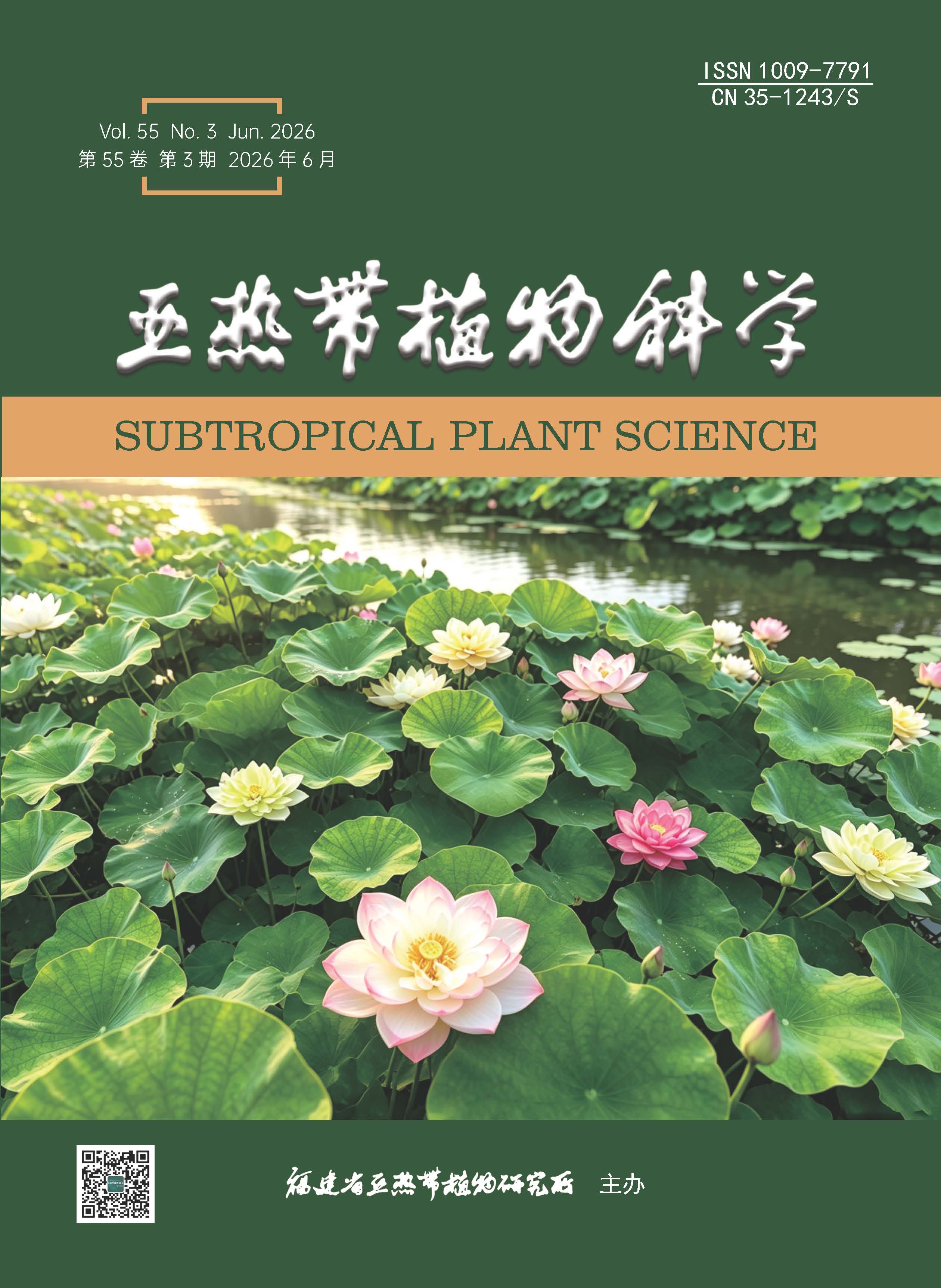
    Relationship Between Leaf Micro-morphological Characteristics and Resistance to Mosaic Disease in Passiflora edulis
    YE Ting, WU Sheng-fang, ZHANG Xue-qin, HUANG Feng, MENG Hong-yan, HONG Cui-yun, REN Ru-tao, GUO Ying
    2026, 55(3): 328-335.  DOI: 10.3969/j.issn.1009-7791.2026.03.007
    Abstract ( )   PDF (480KB) ( )  
    Mosaic disease caused by viral infection is one of the key factors restricting the yield and quality of passion fruit (Passiflora edulis), and screening disease-resistant varieties is the fundamental solution. In this study, four major cultivated passion fruit varieties were used to evaluate the resistance differences to mosaic disease via mechanical inoculation with Cucumber mosaic virus (CMV). The leaf anatomical structures and micro-morphological characteristics of the four varieties were systematically compared using scanning electron microscopy and paraffin section techniques. Meanwhile, key morphological indicators related to mosaic disease resistance were screened through correlation analysis. The results showed that the leaf epidermis of disease-resistant varieties was covered with a uniform and dense flaky waxy layer, with relatively low stomatal density and stomatal size, thicker leaves and denser cell structure. Correlation analysis further confirmed that stomatal density and stomatal size were extremely significantly negatively correlated with disease resistance, while leaf thickness and compactness were significantly positively correlated with disease resistance. This study revealed that the resistance of passion fruit to mosaic disease is closely related to the physical defense structure of leaves. The key structural indicators screened can provide a reliable morphological basis for disease-resistant breeding of passion fruit.
    References | Related Articles | Metrics
    Stoichiometric Characteristics and Correlations of Silage Maize-Soil under Water-Nitrogen Coupling in Hexi Corridor
    LI Chun-yu, MA Wei-wei, ZHU Niu, WANG Jian-fang, LI Guang, WU Jiang-qi
    2026, 55(3): 336-350.  DOI: 10.3969/j.issn.1009-7791.2026.03.008
    Abstract ( )   PDF (1503KB) ( )  
    The Hexi Corridor is a critical base for forage crop agriculture in northwestern China. In order to explore the stoichiometric characteristics of carbon (C), nitrogen (N), and phosphorus (P) in plants and soil of silage maize under varying water and nitrogen conditions in the Hexi region, as well as their influencing factors, a two-factor water-nitrogen experiment was conducted. Based on local irrigation and fertilization practices, three nitrogen application levels (0 (N0), 311 (N1), and 280 (N2) kg·hm–2) and three irrigation levels (6765 (W1), 6150 (W2), and 5535 (W3) m3·hm–2) were established. The contents of C, N, and P in different maize organs and soil under water-nitrogen coupling were measured, along with agronomic traits such as dry matter mass of roots, stems, and leaves, plant height, stem diameter, leaf area, soil nutrients, and microbial enzyme activities. The stoichiometric characteristics of soil-plant systems and their influencing factors under different treatments were investigated. The results showed that water-nitrogen coupling significantly affected maize growth. The W3N2 treatment achieved the highest plant height at maturity (322.72 cm), while the W2N2 treatment produced the maximum biomass at maturity (414.64 g). Leaves exhibited the highest N and P contents, and plant N:P decreased as the growth period advanced. Soil organic carbon (SOC) and total nitrogen (TN) were higher at the jointing stage, and enzyme activities were regulated by water-nitrogen treatments. The correlation between aboveground and belowground parts strengthened with growth progression, being most significant at the jointing and silking stages. At the silking stage, plant N:P showed a highly significant positive correlation with soil N:P, representing one of the key stages with the closest association between the two throughout the growth period. This study provides scientific support for the development of silage maize production in the Hexi Oasis, contributes to theoretical guidance for water-nitrogen resource-saving agriculture in the Hexi Oasis irrigation area, and offers references for water and fertilizer management of silage maize in arid regions.
    References | Related Articles | Metrics
    Study on Phenotypic Trait Diversity of Yulania biondii
    QIN Meng-yao, WANG Jing, LI Yu-ping, LIU Qing-fa, HUANG Jie, WANG Ya-ling
    2026, 55(3): 351-361.  DOI: 10.3969/j.issn.1009-7791.2026.03.009
    Abstract ( )   PDF (536KB) ( )  

    In order to reveal the phenotypic diversity characteristics of Yulania biondii, this study selected 175 twelve-year-old seed-grown individuals as materials, systematically determined 33 phenotypic traits of flowers, leaves and fruits for two consecutive years, and carried out research adopting diversity index, coefficient of variation, principal component analysis and cluster analysis. The results showed that the diversity indices of 20 qualitative and pseudo-qualitative traits ranged from 0.26 to 1.52, with floral traits having the highest diversity level, followed by fruit traits and leaf traits; the coefficients of variation of 13 quantitative traits were 9.73% to 24.45%, and pedicel length, stipule scar length and fruit length were the traits with the highest variation degree in corresponding parts respectively. Correlation analysis of quantitative traits showed that 19 trait combinations were significantly or extremely significantly correlated. Twelve principal components were extracted with a cumulative contribution rate of 73.01%, and the first three principal components respectively reflected the variation characteristics of floral morphology and color, leaf morphology and filament color. Q-mode cluster analysis classified 175 Y. biondii individuals into 7 groups. It confirmed that the presence or absence of sepaloid tepals, the quantity and color of petaloid tepals, the posture of outer whorl petaloid tepals, flower shape and leaf shape were the core indicators for the classification of Y. biondii germplasm resources. The seed-grown population of Y. biondii exhibits rich phenotypic diversity, and the research results can provide a scientific basis for germplasm conservation, evaluation and superior individual selection.

    References | Related Articles | Metrics
    Rediscovery and Supplementary Description of Carex bambusetorum, a Species Endemic to Guangdong, China
    YE Xue-he, ZENG Yun-bao, TONG Yi-hua
    2026, 55(3): 362-367.  DOI: 10.3969/j.issn.1009-7791.2026.03.010
    Abstract ( )   PDF (442KB) ( )  
    Carex bambusetorum Merr., a perennial herb of Cyperaceae, is endemic to Guangdong Province. Ever since the type specimen of C. bambusetorum was collected by Elmer Drew Merrill in 1917, no subsequent records of this species have been made. Due to the limited knowledge of this species, nomenclatural confusion persists in the application of this name and C. planiscapa Chun & F. C. How, which urgently needs clarification. Recently, this species was rediscovered at its type locality, Luofu Mountain. Based on field observations and newly collected specimens, we revised and supplemented the morphological description of C. bambusetorum, discussed its morphological variation, corrected the misapplication of C. bambusetorum and C. planiscapa, confirmed that C. bambusetorum belongs to C. sect. Lageniformes (Ohwi) Nelmes, and updated the key to C. bambusetorum and the species similar to it.
    References | Related Articles | Metrics
    Visual Analysis of Yao Medicine Research Progress in the Last Decade Based on CiteSpace
    XU Lu-an, LI Wen-hai, FAN Rong-jun, TANG Ming-li, LI Meng, ZHAO Bo
    2026, 55(3): 368-377.  DOI: 10.3969/j.issn.1009-7791.2026.03.011
    Abstract ( )   PDF (582KB) ( )  
    This paper systematically review the development trajectory of Yao medicine research over the past decade, clarify its knowledge structure, accurately identify research hotspots, and scientifically predict future directions, thereby providing a systematic reference framework for the modernization and internationalization of Yao medicine. Relevant literature on the theme of Yao medicine was retrieved from Chinese and English databases. CiteSpace 6.2.R4 software was used to conduct a visual metric analysis from three core dimensions: authors, institutions, and keywords, to explore the academic correlations and evolutionary patterns within the literature. A total of 2110 Chinese publications and 205 English publications were included. Chinese research formed collaborative author clusters centered around ZHAO Lichun and ZHU Hua, etc., with Guangxi University of Chinese Medicine as the institutional hub. English research had core authors such as Chiang Jen-huai, primarily featuring institutional collaboration across the Taiwan straits. Both research streams exhibited issues of low network density and limited international cooperation. Chinese research evolved through three stages: basic identification and safety evaluation, in-depth pharmacological mechanism research, integration of cutting-edge technology and industry. Its high-frequency keywords were chemical composition, pharmacological action and rural revitalization. English research focused on active ingredient identification, efficacy mechanisms, and safety evaluation of compound prescriptions, with the ethnic identity marker "Yao medicine" becoming increasingly prominent. Conclusion: Yao medicine research has preliminarily established a modern research system. However, challenges remain in inter-institutional collaboration, international cooperation, and the integration of "industry-university- research". Future efforts need to strengthen these aspects to enhance the scientific connotation of Yao medicine and establish its independent identity within global traditional medicine.
    References | Related Articles | Metrics
    Review
    Research Progress in Structure Modification and Bioactivities of Dendrobium Polysaccharide
    CHEN Fei, CHEN Chun, XU Chuan-jun, MING Yan-lin
    2026, 55(3): 378-384.  DOI: 10.3969/j.issn.1009-7791.2026.03.012
    Abstract ( )   PDF (418KB) ( )  
    Dendrobium polysaccharide is one of the major bioactive constituents of Dendrobium, with significant antioxidant, immunomodulatory and hypoglycemic activities. Its bioactivities are closely correlated with its structural characteristics. However, the inherent complex macromolecular architecture leads to low water solubility and high viscosity, which greatly restrict its practical applications. Therefore, the selection of suitable structural modification strategies is of great importance to improve the bioactivities of Dendrobium polysaccharides and facilitate their product development. This paper reviews the recent progress in structural modification of Dendrobium polysaccharides, focusing on the influences of different modification approaches on the structures and bioactivities of polysaccharides. In addition, the structure-activity relationships of Dendrobium polysaccharides are discussed, aiming to provide valuable references for the further development and application of Dendrobium polysaccharides.
    References | Related Articles | Metrics
Announcements
    Download
    Visitors
    Total visitors::
    Visitors of today:
    Now online: