Loading...

Archive

    31 October 2025, Volume 54 Issue 5 Previous Issue   

    Research articles
    Reviews

    For Selected: Toggle Thumbnails
    Research articles
    Plastid Genome and Phylogenetic Analysis of Psychopsis sanderae
    XU Jing, PAN Ren-fu, HUANG Si-ming, HUANG Wei-chang, LI Ming-he
    2025, 54(5): 487-496.  DOI: 10.3969/j.issn.1009-7791.2025.05.001
    Abstract ( )   PDF (9181KB) ( )  
    Using the leaves of the ornamental orchid Psychopsis sanderae as materials, based on high-throughput sequencing technology, the complete plastid genome of this species was assembled and annotated, and its plastid genome characteristics and phylogenetic position were analyzed. The results showed that the plastid genome of P. sanderae was 143 932 bp in size, presenting a circular quadripartite structure, with a GC content of 37.1%. A total of 127 genes were annotated, including 74 protein-coding genes, 38 transfer RNAs (tRNAs) genes, 8 ribosomal RNAs (rRNAs) genes and 7 pseudo genes. Among them, the entire lineage of the ndh gene family was pseudogenized or lost. The boundaries of the inverted repeat (IR) regions were highly conserved. The junction of the large single copy (LSC) region and the IRb region was located within the rpl22 gene, and the junction of the small single copy (SSC) region and the IRa region was located within the ycf1 gene. A total of 44 simple sequence repeats (SSRs) loci were detected, among which the mononucleotide repeats with adenine (A) or thymine (T) were the most abundant, accounting for 70.45%. Six high-variation hotspots of nucleotide polymorphism were obtained: trnQUUG, trnEUUC, trnSGGA, rps18, rps12, and rpl16. Phylogenetic analyses placed P. sanderae at the basal position within the subtribe Oncidiinae. This study provides the first comprehensive characterization of the plastid genome for P. sanderae, laying a foundation for future molecular marker development and phylogenetic studies of Psychopsis and its relatives.
    References | Related Articles | Metrics
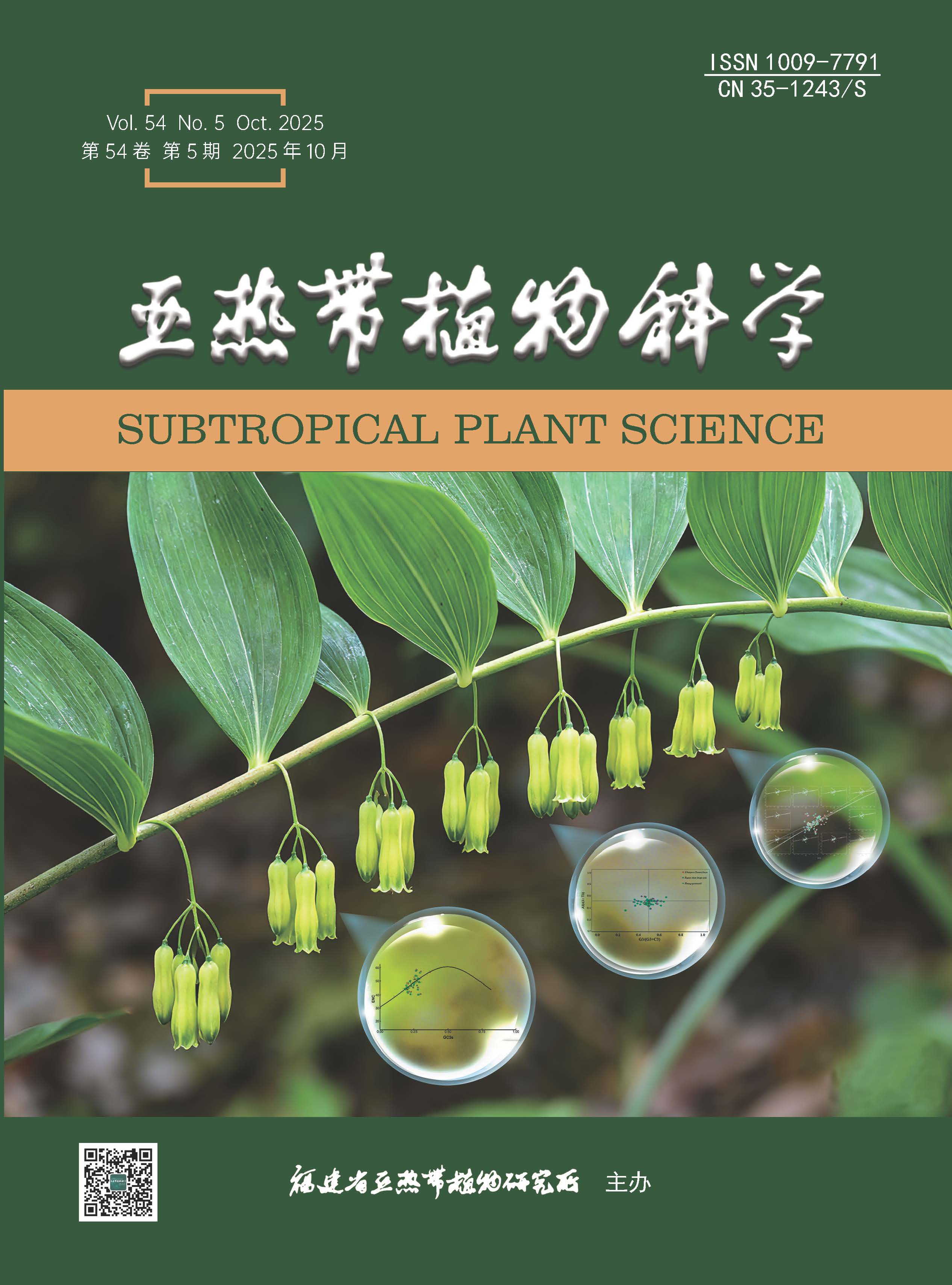
    Codon Usage Bias in the Chloroplast Genomes of 36 Polygonatum Species
    LI Hong, ZHOU Meng-li, WANG Xia, GUO Lei, WANG Rui-hong
    2025, 54(5): 497-507.  DOI: 10.3969/j.issn.1009-7791.2025.05.002
    Abstract ( )   PDF (25850KB) ( )  
    In order to explore the bias of the use of codons and and its influencing factors in the chloroplast genome of Polygonatum medicinal plants, CodonW 1.4.2, CUSP and SPSS27 were used to analyze the codon bias of 36 Polygonatum species. The results showed that the effective number of codons (ENC) ranges between 48.32 and 48.57, and the codon adaptation index (CAI) ranges between 0.166 and 0.168, indicating that the codon preference of the chloroplast genome of Polygonatum was weak. The 36 species of Polygonatum identified five common optimal codons, namely UUU, CUU, ACA, CAA and GGA, which all preferred to end with A/U nucleotides. The codon bias of 36 species of Polygonatum was mainly affected by natural selection. The results provide a theoretical basis for the genetic breeding and germplasm resources protection of Polygonatum medicinal plants.
    References | Related Articles | Metrics
    Effect of Environmental Heterogeneity on Coumarin Metabolites in Forsythia suspensa
    XIN Zhi, WANG Jing, ZHAO Sheng, ZHOU Shan-shan
    2025, 54(5): 508-515.  DOI: 10.3969/j.issn.1009-7791.2025.05.003
    Abstract ( )   PDF (2461KB) ( )  
    To screen out germplasm resources of Forsythia suspensa with high coumarin content and determine the main environmental factors affecting its coumarin metabolism, UPLC-MS/MS was used to analyze the differences of 25 coumarin metabolites in F. suspensa from 10 populations and their correlations with environmental factors. The results showed that the contents of 25 coumarin metabolites were significantly different among 10 populations. Specifically, in both Luanchuan (LC) and Pingshun (PS) populations, the contents of 6 coumarin metabolites were significantly higher than those in other populations. Among them, ostruthin was significantly positively correlated with temperature bio1, bio5, bio8, bio10. Esculin and daphnin were significantly positively correlated with temperature bio4, bio7, bio2. Dimethyllimettin was significantly positively correlated with temperature bio9, bio11. Fraxetin glucose glucoside was significantly negatively correlated with temperature bio6, bio9, bio11. Dimethyllimettin, coriandrin, 4',5'-dihydropsoralen, 5,8-dihydroxypsoralen, 6-hydroxy-4-methylcoumarin were significantly positively correlated with precipitation bio17, bio19. In conclusion, the LC and PS populations exhibited high levels of coumarin, a bioactive component in F. suspensa. This could be attributed to local adaptation to environmental heterogeneity, particularly in terms of temperature and precipitation, rather than altitude. The research findings hold reference value for the selection and breeding of superior germplasm resources of F. suspensa, as well as for its introduction, cultivation, and production management.
    References | Related Articles | Metrics
    Optimization of Extraction Process and Antioxidant Activity of Polysaccharides from Jasminum grandiflorum
    CHEN Cai-hong, HU Gui-e, WANG Wen-feng, LI Dong-li
    2025, 54(5): 516-522.  DOI: 10.3969/j.issn.1009-7791.2025.05.004
    Abstract ( )   PDF (7318KB) ( )  
    This study aimed to optimize the process of extracting crude polysaccharides from Jasminum grandiflorum by water extraction and explore its antioxidant activity. Taking the polysaccharide yield as the index, based on single-factor experiments, the Box-Behnken (BBD) response surface methodology was adopted to optimize the extraction process. The J. grandiflorum polysaccharides (SP) were obtained by removing proteins and small-molecule impurities through the Sevage method and dialysis, and their antioxidant activities were determined. The results showed that the optimal extraction process conditions for crude polysaccharides from J. grandiflorum were a liquid-to-solid ratio of 15 mL·g–1, an extraction temperature of 94 ℃, and an extraction time of 2.5 h. Under these process conditions, the average yield of crude polysaccharides from J. grandiflorum was 12.25%, which was close to the predicted extraction rate of 12.24%. The results of antioxidant activity determination showed that SP had scavenging rates of 80.83% and 69.63% for 1,1-diphenyl-2-picrylhydrazyl (DPPH) radicals and 2,2'-azino-bis (3-ethylbenzothiazoline-6-sulfonic acid) diammonium salt (ABTS) radicals, respectively. In addition, the IC50 values were 2.04 mg·mL–1 and 3.60 mg·mL–1, respectively, indicating its antioxidant activity. In conclusion, the water extraction-alcohol precipitation method is simple, efficient, and suitable for the extraction of SP, which have antioxidant potential.
    References | Related Articles | Metrics
    Plant Morphology, Microscopic Identification and Component Analysis of Goodyera brachystegia
    TANG Xiao-hui, WANG Shuo-shuo, WU Jian-guo, WU Yan-bin
    2025, 54(5): 523-530.  DOI: 10.3969/j.issn.1009-7791.2025.05.005
    Abstract ( )   PDF (28372KB) ( )  
    The morphology and tissue structure of Goodyera brachystegia were studied by pharmacognosy identification method, and the contents of its main components, including kinsenoside, total flavonoids and polysaccharides, were determined by HPLC-ELSD method and UV spectrophotometry. The leaves of G. brachystegia are elliptical or ovate, with green upper surface without white spots and light green underside. The flowers are small, with white petals, oblique rhombus-shaped oblanceolate. The lip is broadly ovate, with light yellow base, and concave into a hemispherical hood. Microscopic identification shows that the ventilation tissue of the root cross-section is well developed, and the vascular bundles are arranged in a radial pattern of multiple archetypes. The vascular bundles of the stem are scattered into a finite external tough type. The lower epidermis of the main vein of the leaves is semicircular and raised, and the stomata of the lower epidermal are mainly indefinite. The average contents of kinsenoside, total flavonoids and polysaccharides in two batches of G. brachystegia were 14.90%, 1.52% and 2.05%, Among them, kinsenoside is a distinctive chemical marker that differentiates G. brachystegia from other Goodyera species. The above characteristics can provide a reference for the identification, resource development and utilization of G. brachystegia.
    References | Related Articles | Metrics
    Fruit Texture Quality of 10 Table Grape Varieties in Hexi Corridor
    HAN Duo-hong, LIU Ren-xin, QI Yue-han, WANG Xuan-ning, XIAO Xu-dong, HAO Jun-yuan
    2025, 54(5): 531-536.  DOI: 10.3969/j.issn.1009-7791.2025.05.006
    Abstract ( )   PDF (389KB) ( )  
    To explore the differences in the texture quality of fresh table grapes produced in the Hexi Corridor region, the texture parameters of 10 fresh table grape varieties, including firmness, crispness, adhesiveness, etc., were measured by texture profile analysis (TPA). Correlation analysis, principal component analysis and cluster analysis were used for comprehensive evaluation of the fruit quality. The results showed that the flesh firmness, chewiness and adhesiveness of Vitis vinifera 'Red Globe' and 'Thompson Seedless' were significantly higher than those of other varieties, while the chewiness, adhesiveness and cohesiveness of 'Guifei Meigui', 'Miguang' and 'Summer Black' were significantly lower than those of other varieties. Correlation analysis indicated that firmness was highly significantly positively correlated with crispness, elasticity, chewiness, adhesiveness and resilience (P<0.01). Principal component analysis showed that 'Red Globe' and 'Thompson Seedless' had higher scores, while 'Jingyu' and 'Miguang' had lower scores. Cluster analysis divided the 10 fresh table grape varieties into 3 groups at the Euclidean distance of 8.0. In conclusion, 'Red Globe' and 'Thompson Seedless' had excellent texture quality, suitable for long-term storage and transportation, while 'Guifei Meigui', 'Miguang' and 'Jingyu' had poor texture quality and were suitable for local seasonal sales.
    References | Related Articles | Metrics
    Dynamics of Potato Yield and Water Consumption under Water and Nitrogen Regulation with Mulched Drip Irrigation in Arid Oasis
    GUO Peng-fei, ZHOU Chen-li, LI Hai-yan, ZHANG Heng-jia
    2025, 54(5): 537-547.  DOI: 10.3969/j.issn.1009-7791.2025.05.007
    Abstract ( )   PDF (932KB) ( )  
    Three water deficit treatments were set up: water deficit during the seedling stage, during the tuber-formation stage, and during both stages. Three nitrogen application levels were additionally established in the experiment: high nitrogen N1 (240 kg·hm–2), medium nitrogen N2 (185 kg·hm–2), and low nitrogen N3 (130 kg·hm–2). Based on meteorological factors and reference crop evapotranspiration during the potato growth season, the water consumption, crop coefficient, and yield variation patterns of potato were analysed under mulched drip irrigation were analyzed in drought oasis. The results showed that the reference crop evapotranspiration during the entire growth period of potato was 487 mm in 2023 and 509 mm in 2024, with the evapotranspiration intensity reaching the peak during tuber-formation stage, being 4.40 mm in 2023 and 4.29 mm in 2024. The water consumption increased with the increase in nitrogen application level, and the water consumption was the largest in the water deficit treatment during the seedling stage, ranging from 282.82 mm to 367.89 mm. The crop coefficient was directly proportional to the nitrogen application rate, and the water deficit period had a highly significant effect on the crop coefficient. The crop coefficients during the seedling stage, tuber formation stage, tuber expansion stage, and starch accumulation stage were 0.21 to 0.43, 0.46 to 0.71, 0.88 to 1.15, and 0.54 to 0.80, respectively. The medium nitrogen treatment with water deficit during the potato seedling stage could achieve stable yield, water savings, and reduced nitrogen use. This study quantified the water requirement of potato under drought oasis mulched drip irrigation at different growth stages under water and nitrogen treatments, providing a theoretical basis for optimising the water-saving irrigation system.
    References | Related Articles | Metrics
    Physiological Mechanism of Exogenous Ethephon Promoting Flower Falling of Street Tree Mangifera persiciforma
    LIN Yan-jun
    2025, 54(5): 548-554.  DOI: 10.3969/j.issn.1009-7791.2025.05.008
    Abstract ( )   PDF (9107KB) ( )  
    Different concentrations of ethephon were applied to the street trees Mangifera persiciforma in Xiamen and the flower shedding rate across varying temporal intervals was observed, as well as changes in physiological indicators including endogenous hormone levels (e.g., ABA, IAA), antioxidant enzyme activities (e.g., POD, SOD), and intracellular solute contents. The optimal concentration of ethephon for promoting flower abscission was determined to be within the range of 400 to 600 mg·L–1, with a flower abscission rate approaching 100% and no obvious damage to leaves. After ethephon treatment, endogenous ABA in both leaves and flowers first increased and then decreased. Endogenous IAA in leaves peaked at 1 d post-treatment, then decreased and stabilized, while IAA content in flowers declined gradually. POD activity in leaves increased sharply before slightly declining, whereas in flowers, it exhibited a decreasing trend. SOD activity in leaves showed a trend of first decreasing then increasing, while in flowers, it significantly increased under the influence of ethephon. Malondialdehyde (MDA) content in leaves decreased at 7 d and rebounded at 15 d post-treatment, while in flowers, it increased progressively over time. Soluble sugar content in leaves first decreased then increased, whereas in flowers, it showed an overall downward trend. Changes in soluble protein content in both leaves and flowers were relatively stable. In summary, ethephon at 400–600 mg·L–1 can effectively promote M. persiciforma flower abscission through the regulation of endogenous hormones, antioxidant enzyme activities, and intracellular solutes.
    References | Related Articles | Metrics
    Investigation and Risk Analysis of Forest Pests in Autumn in Fujian Area of Wuyishan National Park
    LIU Xian-zhou
    2025, 54(5): 555-561.  DOI: 10.3969/j.issn.1009-7791.2025.05.009
    Abstract ( )   PDF (15380KB) ( )  
    In Sept. 2024, an investigation was conducted on the occurrence types, distribution range, and damage conditions of forest pests in the Fujian section of Wuyishan National Park. Based on the field investigation results, a risk analysis of the main pests was carried out. Through on-site investigation, 135 species of forestry pests were discovered, including 46 families in the order Lepidoptera, Hemiptera, Coleoptera, Orthoptera, Isotera and Hymenoptera. Among them, Lepidoptera pests were the most numerous, followed by Hemiptera pests. Based on the results of this field investigation and light trapping, combined with the third national forest pest and disease census, the census of invasive alien species in the forest, grassland and wetland ecosystems of Wuyishan National Park, and the literature records, a risk assessment was conducted for four highly damaging pests: Monochamus alternatus, Anoplophora glabripennis, Hylobitelus xiao, and Dendrolimus punctatus. The results showed that D. punctatus posed a high risk, while the other three species were classified as medium risk. This field investigation has basically clarified the types of forestry pests in the Fujian section of Wuyishan National Park and conducted risk assessments on the main forestry pests, providing a theoretical reference basis for the prevention of the occurrence and spread of forestry pests in this area.
    References | Related Articles | Metrics
    Method for Color-Preservation and Plastication of Green Plant Leaf Specimens
    ZHANG Zi-hao, BAO Wei-er, TIAN Hui-zhong, ZHEN Cong-ai
    2025, 54(5): 562-567.  DOI: 10.3969/j.issn.1009-7791.2025.05.010
    Abstract ( )   PDF (8901KB) ( )  
    Green plant leaves specimens are important materials for research and teaching in botanical, agronomy, and forestry. However, the green plant leaf specimens prepared by conventional drying methods are prone to problems such as discoloration, damage, and poor long-term preservation. In order to establish an effective long-term preservation method for green plant leaf specimens, the primary-color infusion technique were combined with the polyethylene glycol plasticization technique, and the fixative solution ratio and production process were optimized. In this study, the leaves of maize (Zea mays) and Chinese rose (Rosa chinensis) were used as materials, which were subjected to a series of steps including primary-color immersion, plasticization, and low-temperature freeze-drying. The results showed that the plant green leaves were firstly immersed in a saturated copper sulfate solution containing 0.05% acetic acid for 5-6 min, followed by gradient plasticization with PEG 600 and low-temperature freeze-drying. The plant green leavf specimens using this method are easy to observe, less prone to damage, delicate and beautiful, which can maintain both the external morphology and the color characteristics of plant green leaves to achieve long-term preservation without fading. This study provides a new preservation method for green plant leaves specimens, which were used in botanical, ecological, and agronomy-related experimental courses or instructional activities–such as plant field techniques, agricultural entomology, plant pathology, and weed science.
    References | Related Articles | Metrics
    Two New Records of Lichen Family Arthoniaceae from China
    QIU Hui-kang, WANG Xiao-xia, LIU Wei-rong, LI Ruo-tong, CHEN Li-hua, XU Yuan-ke, WU Yao-cheng, ZHANG Lu-lu
    2025, 54(5): 568-573.  DOI: 10.3969/j.issn.1009-7791.2025.05.011
    Abstract ( )   PDF (6979KB) ( )  
    Cryptothecia and Herpothallon are significant genera within the family Arthoniaceae. Based on field surveys and collected lichen specimens, a taxonomic study was carried out using morphological, anatomical, and chemical analyses. Notably, two species, Cryptothecia scripta G. Thor and Herpothallon confluenticum Aptroot & Lücking, were recorded for the first time in China. Detailed descriptions and illustrations were provided for each species. This study enriches the biodiversity of lichen Arthoniaceae in China and contributes to the conservation and further study of lichen in the region.
    References | Related Articles | Metrics
    Stereosandra, a Newly Recorded Genus of Orchidaceae in Hainan Province
    LIANG Jian-wei, SU Yun-feng, YAN Sen, CHEN Zhi-heng, AN Zi-wen, ZHANG Zhe, SONG Xi-qiang
    2025, 54(5): 574-577.  DOI: 10.3969/j.issn.1009-7791.2025.05.012
    Abstract ( )   PDF (11696KB) ( )  
    This paper reports a newly recorded genus, Stereosandra Bl., of wild Orchidaceae in Hainan Island. Through molecular sequencing, morphological comparison, description verification, and anatomical evidence, it is identified as S. javanica Bl. The morphological characteristics and growth environment of this species are described, and color pictures of this species are provided. The discovery of the genus Stereosandra enriches the wild Orchidaceae plant resources in Hainan Island, providing a basis for the study of the flora composition, biodiversity research, and species protection in this region. The voucher specimens are preserved in the herbarium of College of Forestry, Hainan University (HUFB).
    References | Related Articles | Metrics
    Reviews
    Advances in Plant Three-Dimensional Genomics Research
    LI Qiu-jia, QIU Bing-hui, LI Ling-yu, CHEN Shuang, YU Ke-qin
    2025, 54(5): 578-586.  DOI: 10.3969/j.issn.1009-7791.2025.05.013
    Abstract ( )   PDF (9428KB) ( )  
    As a research hotspot in the post-genomics era, 3D genomics is dedicated to revealing the three-dimensional spatial structure of the genome within the cell nucleus and its associations with biological processes. Compared with animals, plant 3D genomics, despite starting later and facing numerous technical challenges, has achieved significant progress in recent years. This paper systematically reviews the development of technical approaches in plant 3D genomics research, the characteristics of the three-dimensional hierarchical structure of plant genomes, and explores the technical challenges encountered in the research process, aiming to provide theoretical support and practical guidance for the future development of this field.
    References | Related Articles | Metrics
    Research Progress of Yulania biondii
    QIN Meng-yao, WANG Jing, LIU Qing-fa, HUANG Jie, LI Yu-ping, WANG Ya-ling
    2025, 54(5): 587-596.  DOI: 10.3969/j.issn.1009-7791.2025.05.014
    Abstract ( )   PDF (5894KB) ( )  
    Yulania biondii (Pamp.) D. L. Fu is a kind of excellent and precious species in the genus Yulania of Magnoliaceae, which has important medicinal and ornamental values, and is mainly distributed in the transition zone from warm temperate zone to north subtropical zone in China. This article provides a comprehensive review of the research progress on Y. biondii, covering its biological and ecological characteristics, genetic characteristics and interspecific relationships, chemical composition and pharmacological effects, stress resistance, breeding techniques, and landscape application. It further discusses the directions for research in future, with the aim of providing reference for the basic research, variety breeding and industrial development of Y. biondii.
    References | Related Articles | Metrics
    China, Mother of Gardens, in the Twenty First Century, and it’s Editing Progress
    HE Ran, WEI Yu, MA Jin-shuang
    2025, 54(5): 597-598. 
    Abstract ( )   PDF (1683KB) ( )  
    Though China has been called Mother of Gardens since nearly a hundred years ago, the Chinese ornamental plants resources and their contribution to the horticultural world has never been summarized. Through the hard work of China National Botanical Garden (North Garden) with more than seventy institutions by nearly 170 contributors both from home and abroad, ten volumes of China, Mother of the Gardens, in the Twenty First Century, with 5995 pages and more than 11,520,000 words, have been published in the past four years (2022—2025). The contents and procedure of ten volumes and the prospect of future volumes are introduced here, and we hope more colleagues could join us in writing the new chapter of a series of books entitled China, Mother of Gardens in the Twenty-First Century.
    References | Related Articles | Metrics
Announcements
    Download
    Visitors
    Total visitors::
    Visitors of today:
    Now online: